Thursday, 14 May 2015

Serious technology needs a serious crane

In my copious spare time I serve on the Management Committee for the Ramaciotti Centre for Genomics. The Ramaciotti Centre provides technology and services for genomic research, particularly in the area of next-gen DNA sequencing. The Centre is based at the University of New South Wales, but is supported by a consortium of universities and research institutes around the Sydney area (including Macquarie).

Last year I was part of a team led by Marc Wilkins that attracted funding from the Australian Research Council for a new PacBioRSII sequencer. This sequncing instrument will extend our technical capabilities enabling the generation of very long DNA sequence reads compared with other technologies, as well as enabling the detection of methylated and other modified bases in DNA.

After purchasing the instrument, one technical hurdle that had to be overcome was actually getting it into the building, as the Pac Bio sequencer was too big to fit through the doors. The solution- get a big ass crane. Here's photos of the sequencing instrument being installed (Thanks to Marc Wilkins for the photos).

Seems to be happening at night- maybe to minimise the chance of dropping it on students

Ok it is a pretty sizeable piece of hardware

Thursday, 7 May 2015

About time for a gaming post

It's been a while since I've had a gaming related post. My friend Fraser sent me this link- The Fifty Best Strategy Games Ever Made. Sadly, I have only played 14 of them, Fraser tells me he has played 30 of them, putting me to shame (I have played most of the top ten at least).

Saturday, 2 May 2015

Wine making

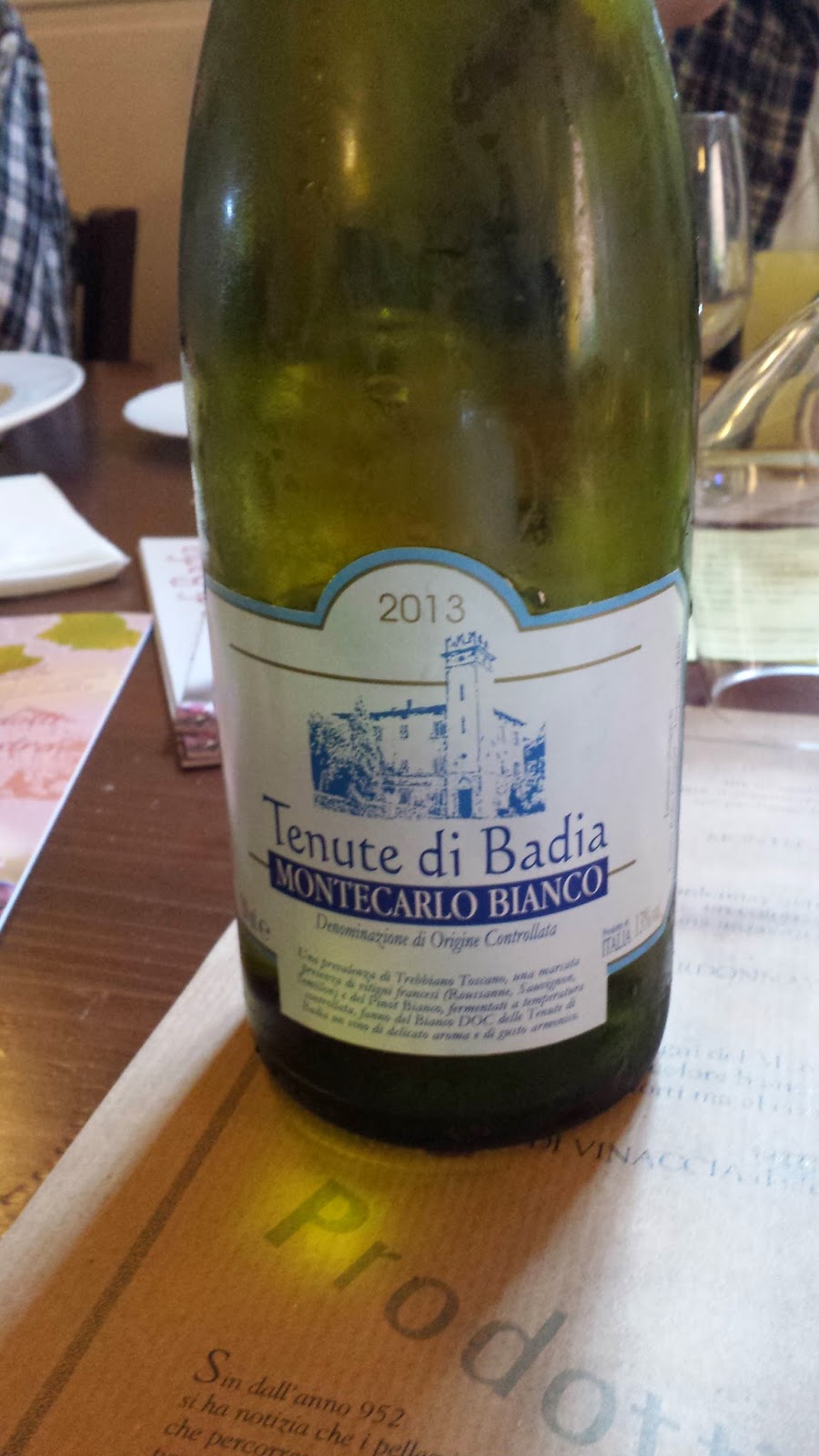
Continuing on with the theme of practical microbiology, the day after the tour of a traditional cheese making factory, we had a tour of a Tuscan winery at Tenute di Badia.

First step- grow some grapes. The front rows seen here are Chardonnay grapes. The grapes are handpicked each year.


Not the engine from the Millenium Falcon, this is the grape crusher, the liquid from the crushed grapes gets piped over into the fermentation facility, the residue of the crushed grapes gets magically distilled into grappa.


OK now we are into some serious microbiology. These are 750 hectolitre fermentation vessels. Sort of puts the 30 litre fermentor in our department to shame. The crushed grapes ferment here for some period of time that I don't remember now because I drank too much wine. 


To be offically classified as a DOCG (Denominazione di Origine Controllata e Garantita) wine, the alcohol content has to be carefully managed during fermentation. These fermentation vessels have an outer sheathe through which cold air circulates to keep the fermentation temperature from getting too high.


Lots and lots of fermentation vessels. After these, age in oak barrels for quite a while, and put into bottles (yay!)


And the end results-
Vivace "lively" is their sparkling wine (can't be called prosecco because it's not the right region). Goes down very easily.


Dry white-


 Chardonnay- not as dry


Rosso- made from the exact same red grape as Chianti, but the winery is located 23 km away from the Chianti region, so it can't be called a Chianti.


Dessert wine (late harvest) and the Grappa. Some of the dessert wine mysteriously made it into my luggage for the trip home.


Cheese Making

Gordon Research Conferences are fairly intense experiences, each day starts at 8.30 am in the morning and then ends around 11 pm with a late night poster session (fortunately the poster session has alcoholic beverages available to help fuel scientific discussions). There is typically some free time in the afternoon though for 3 hours or so.

In our free time yesterday there was a tour organized of a traditional cheese making factory in Tuscany. Since half of the conference attendees are microbiologists, there was alot of enthusiasm about seeing practical microbiology in action.


The first requirement was that we all dress up in embarrassing outfits.


The cheese making factory sources 4 types of milk- cow, sheep, goat and buffalo, from which it can make 480 types of cheese! Once the milk arrives it is refrigerated in its own specific storage tank. The following day it is pasteurized at 73 C in this apparatus here (OK so you can't really see it, but we do we have a good view of the back of Melissa Brown's head).


After the milk is pasteurized, it is pumped into this large vat, I think it can hold 500 litres. Rennin and a starter bacterial culture is added, and the vat is heated to 30-40 C for an hour. After this incubation the milk separates into curds (solid) and whey (liquid). The curds are formed from the casein protein coagulating, while the whey is the rest of the milk proteins.


These two instruments are not medieval torture implements, but instead are used to cut up the curds in the vat so that the curds sink to the bottom. One of them is called a guitar, no clue what the other is called, but it sort of looks like a screw.


The whey is then sucked out, leaving the curds behind (seen here in action).


The whey is sort of a waste product of the process, but it is still useful. The whey is heated up to 90 C so that it curdles, and the curdled whey is placed into containers (seen here), refrigerated and voila we have ricotta, which is ready to eat.


Back to the curds. The curds are removed from the vat and poured into cylindrical containers that have holes in the bottom (like a colander). Excess fluid drains through those holes.


The curds are upended a few times into empty containers to help the curds settle and remove the excess liquid. (the guy with the bushy beard is the master cheesemaker)


Close up of the curds.


After the curds have drained, they are covered in salt to prevent bacterial spoilage, chilled, and then allowed to mature (exact time/method depends on the type of cheese).

Thanks to Caseificio Bertagni for showing off their cheesemaking and putting up with all the thousands of questions from enquiring microbiologists, and mostly importantly for letting us taste their delicious cheeses.


Tuesday, 28 April 2015

Greetings from Tuscany!

I am currently in Tuscany for the Gordon Research Conference on Multidrug Efflux Systems. This is the first time I've been able to attend this meeting since the very first one in 2003. There are actually a few hundred different Gordon Research Conferences (GRC), each on a different scientific topic. I'll be at another GRC in August in Hong Kong. GRCs are typically smallish meetings (100-150 scientists) held in relatively remote locations, so attendees are "trapped" at the meeting. I've always liked this format, as you eat all meals together and stay at the same location, so it provides a great opportunity to meet people and chat about science.

GRCs encourage speakers to present unpublished data, but this has the consequence that all presentations at the conference are confidential so I can't blog about any of the cool science being discussed. I guess I can at least chat about presentations from my own group. I gave a talk and Karl had a poster on our work on the new family of drug efflux pumps that we have discovered. My talk seemed to generate alot of interest as I had about fifteen people ask questions at the end of my talk. The good thing about talking early in the meeting is I don't have to stress over my talk, and I can relax and enjoy the rest of the GRC.

This GRC meeting is held at the the Il Ciocco Resort which is near Lucca in Tuscany. It is a very attractive location, though currently somewhat foggy and rainy.

View from my window this morning


Thanks to Karl Hassan for finding this cartoon. It's not quite this bad.

Friday, 10 April 2015

Syn Bio and twitter

Well I've so far avoided getting on twitter (or facebook) as I have enough time sinks already. This probably makes me a fossil. I recently hosted a planning meeting to start organizing a bid for a Synthetic Biology Centre. My colleague Louise Brown is very active on twitter, and commemorated the occasion with this tweet.  

In case you don't want to follow the link, here's the photo of us

JAMS turns 4, Blog turns 3

Well, I'm a month or so late, but JAMS (Joint Academic Microbial Seminars) had its 4th birthday, and celebrated in its usual fashion by holding an afternoon symposium, followed by dinner at the Australian Museum.Excellent speakers as usual, the highlight for me was Kat Holt's talk on using genomics to understand the epidemiology and evolution of bacterial pathogens causing diseases such as typhoid and dysentery.

A talk on typhoid and dysentery is of course a perfect lead in to dinner, which was in the dinosaur room. A great chance to catch up with colleagues and friends, except for the second year the band was so loud, it was hard to converse with anyone (yes I've become an old fuddy-duddy, plus I'm also somewhat deaf).

I know when JAMS has its birthday, it is also the birthday for this blog as one of my first blog posts was about the first JAMS symposium. So happy birthday all round!

Yay! Biggest ever attendance for a JAMS meeting. Who is that thoughtful looking fellow there in the front row?